Visiting Scholars, Summer 2026
This year, St John's has awarded six scholarships to senior academics working on a range of interdisciplinary projects encompassing Biology, History of Art, International Relations, Medicine, Music, and Political Science. We are delighted to be joined by Alison Avenell, Patricia Chiantera, Thomas Hodgson, Thomas Höfer, Anna Kneifel, and Matthias Schulz, and look forward to their contributions to College life over the summer.
Details of their respective research interests can be found below.
" We look forward to welcoming this year’s Visiting Scholars to St John’s. As ever, our visitors come from a diverse range of subjects and from leading institutions around the world. We look forward to learning from their expertise and broadening our thinking. " Professor Lady Sue Black, President of St John's College
As a clinical researcher with a focus on clinical trials and evidence synthesis, I work with interdisciplinary teams. My research increasingly focusses on metascience – ‘how to do, report, verify, correct, and reward science’ (here). I also investigate how ‘not’ to do science through research integrity investigations, as a research ‘sleuth’ (here).
I wish to explore what financial, physical, structural, psychological, social and personal factors enhance the generation of research ideas? How to convey those ideas? For example, physical meeting places and libraries can create the setting for contemplation, meeting others and inspiration for research. Modern research structures focussing on outputs could be counterproductive and inhibit interdisciplinary research.
I will explore these questions using archival material in Oxford relating to a key period in the history of interdisciplinary plant research. Between 1768-71 James Cook captained perhaps the most important and productive European botanical voyage of discovery. Botanists Joseph Banks, Daniel Solander and Hermann Spöring with botanical artist Sydney Parkinson, worked with Polynesian and Mäori people to collect, describe, paint and classify hundreds of plants, unknown to western science. Their magnificent Florilegium was published over 200y later. How did they come to work together (this interdisciplinary team), cramped onboard for days at a time, surviving shipwreck, and mostly overcoming disease?
As an interdisciplinary community, St John's College provides a unique opportunity to discuss what drives people’s research ideas, whatever their discipline or stage of career.
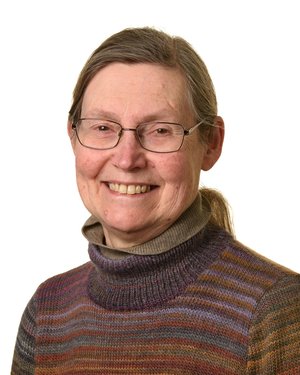
Patricia Chiantera earned two PhDs: one in Germany, in Saarbrücken, in 2000 with a dissertation entitled “Von der Avantgarde zum Traditionalismus. Die radikalen Futuristen im italienischen Faschismus (1919–1933)” (Campus Verlag Frankfurt, 2002), and the previous year in SAS Modena with a dissertation entitled “Julius Evola dal dadaismo alla rivoluzione conservatrice 1919–43” (Ed. Aracne Rome, 2001). She is currently Full Professor in History of Political Thought at the University Bari, Vice President of the European Society of the History of Political Thought and a member of the board of the Italian Association for the History of Political Thought.
She has been awarded several research fellowships: from the CNR, the Istituto per gli Studi Filosofici in Naples, the DAAD, the Leibniz Institute in Leipzig, and the University of Cologne. She was a Jean Monnet Fellow at the EUI and received a fellowship from ITC in Trento. She is a member of the scientific committee of “Storia del Pensiero Politico” (a top-tier academic journal) and contributes to several Italian and international journals.
Her current research interests focus on the history of liberal internationalism, twentieth-century historiography, the history of geopolitics, populism, civilisationism. Selected publications include: Delio Cantimori (Rome, 2011); Il pensiero geopolitico (Rome, 2014); Denken Im Raum (ed. With U. Jureit, Baden Baden 2021); Civilization, Global Histories of a Political Idea (ed. with Giovanni Borgognone, Laham, 2022); Geo-political Spaces. Interdisciplinary Perspectives on Carl Schmitt (ed. With U. Jureit, London, 2026).
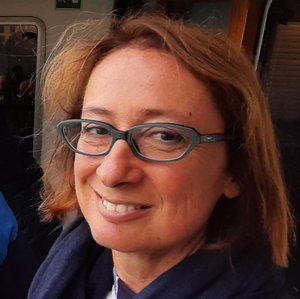
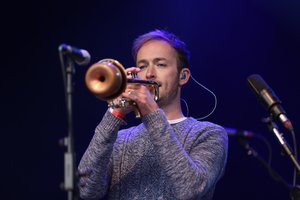
Thomas Hodgson is Associate Professor of Musicology and Music Industry at the University of California, Los Angeles. His research lies at the intersection of ethnomusicology, migration studies, and STS (Science and Technology Studies), with a particular focus on music streaming, algorithms, and generative AI. His work is grounded in long-term ethnographic fieldwork in the UK and Pakistan, examining how musicians navigate changing creative economies and technological infrastructures.
He is the author of Journeys of Love: Kashmiris, Music, and the Poetics of Migration (University of Chicago Press, 2025), and co-founder of the journal Music and Data (University of California Press), which brings humanistic and computational approaches to music and sound studies into dialogue. His current book project Making It / Breaking It: Musical Creativity and Value in the Shadow of AI. The ethnography at the heart of the book explores how musicians working within local music scenes like Oxford’s respond to shifting forms of value in an era of platformisation and artificial intelligence.
Alongside his academic work, he is an active musician and member of the Oxford-based band Stornoway, who performed a headline show at the Royal Albert Hall earlier this year.
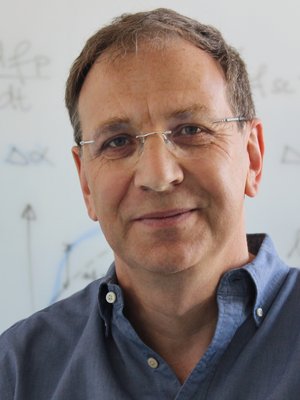
Thomas Höfer heads the Division of Theoretical Systems Biology at the German Cancer Research Center (DKFZ) and is a professor in the Faculty of Biosciences at Heidelberg University. His work focuses on how stem cells regenerate blood and other renewing tissues, and on how tissue renewal goes awry during the evolution of cancer. His group develops mathematical models to study the behavior of stem cells and cancer cells within intact organisms. These methods use experimental measurements of heritable cellular ‘barcodes’—such as mutation patterns—to infer the dynamics of cell proliferation, differentiation, and selection.
After studying biology and physics at Humboldt University Berlin, Dr. Höfer obtained his DPhil in mathematical sciences from the University of Oxford. During his doctoral studies, he was a Jowett Senior Scholar at Balliol College. He carried out postdoctoral research at the Collège de France and established his research group at Humboldt University Berlin before moving to the DKFZ and Heidelberg University. He has held visiting professorships at the École Normale Supérieure and at the Radcliffe Department of Medicine and the Weatherall Institute of Molecular Medicine (WIMM) in Oxford, and is a Fellow of the Berlin-Brandenburg Academy of Sciences.
During his stay as a Visiting Scholar, he aims to further develop mathematical approaches to cancer evolution in order to predict—earlier than is currently possible—when tissues are at risk of malignant transformation. This work will be carried out in collaboration with colleagues at the WIMM and the Mathematical Institute.
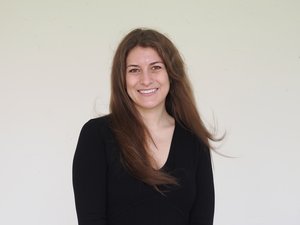
Anna Kneifel is a scholar-practitioner working at the intersection of humanitarian practice, international relations, and organisational decision-making, with a decade of experience in conflict-affected settings through her work with the United Nations and the World Bank. Her fieldwork spans a wide geographical range, from Afghanistan to Zimbabwe, and includes four years in Syria and Libya during the civil wars in both countries.
Since July 2024, Anna has been affiliated with the Harvard Humanitarian Initiative, where she advanced her research on humanitarian response, International Humanitarian Law, and crisis management. Prior to joining Oxford, she held a fellowship at Judge Business School, University of Cambridge.
During her scholarship, Anna will be developing case studies on decision-making in humanitarian crises, which will form the foundation of a summer school course she will teach at the University of Oxford in August 2026. Her time at St John’s provides an opportunity to develop this curriculum while furthering her research on decision-making in humanitarian contexts.
Dr Matthias Schulz studied Theology, Philosophy, and Art History in Göttingen, Leipzig, and Berlin. He completed his doctorate at the Braunschweig University of Art (HBK Braunschweig) with a dissertation on the natural-historical and philosophical implications of stone materiality in the work of Andrea Mantegna. Since 2021, he has been a research associate in Medieval Art History at Justus Liebig University Giessen and also an Associated Researcher at the research focus Historical Image Cultures (Historische Bildkulturen) at the Herzog August Library in Wolfenbüttel. His current research focuses on the history of chess piece design and the epistemic dimensions of chess within the material and visual cultures of the European Middle Ages. His broader interests include premodern abstraction and theories of form and matter, nature and art in European art between 1300 and 1600.