The Bray, Ferrard, McDonald Collection for the Study of Arabic-script Books
In Hilary 2026, the St John's College Library received a distinctive collection of Arabic-script manuscripts and early printed and lithographed books, to be known as the 'Bray, Ferrard, McDonald Collection for the Study of Arabic-script Books'. The donation comprises seventeen manuscripts together with printed and artists’ books in Arabic, Persian, Ottoman Turkish and Urdu, acquired over several decades from the Middle East, Turkey, and North and West Africa.
The collection was generously donated by Professor Julia Bray, Emeritus Research Fellow in Arabic, and was assembled over several decades to support teaching and further scholarship. Professor Bray has also produced a catalogue documenting her research.
Unlike many institutional holdings that emphasise luxury or presentation volumes, the Bray, Ferrard, McDonald Collection reflects the everyday book culture of the Islamic world: affordable student copies, devotional texts and popular editions that bear marks of use, annotation and ownership. Such material is comparatively rare in major libraries but offers valuable insight into the social and economic history of reading.
Intended specifically for teaching and handling sessions, the books will give students practical experience in palaeography, manuscript studies and the history of the book, while complementing the College’s and the Bodleian Libraries’ wider Middle Eastern collections.
Although it has been catalogued and documented as a guide to readers, there is still plenty of research to do on the collection. For instance, most of the manuscripts are copied on European paper, and display a wealth of unidentified watermarks dating from the sixteenth to the eighteenth centuries.
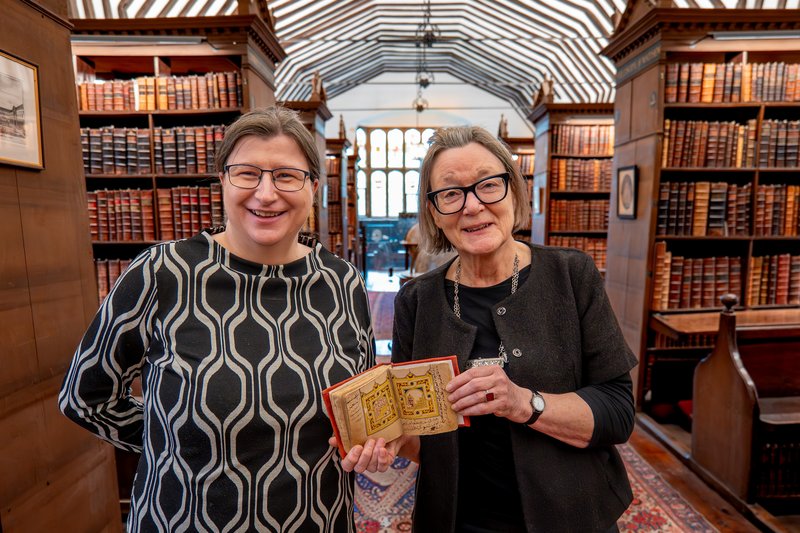
Noteworthy items in the collection include:
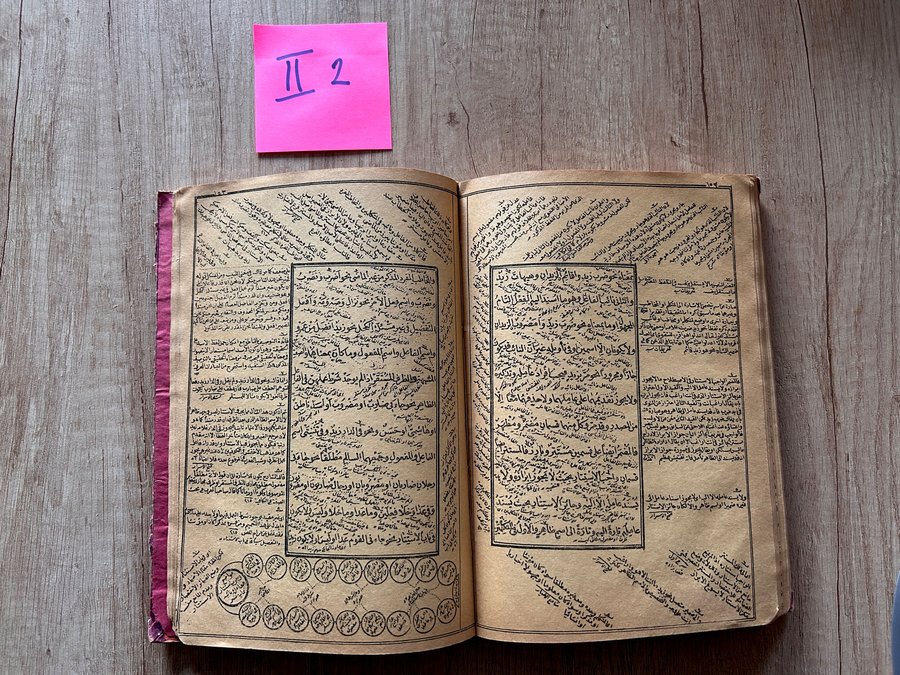
II 2 (ii), Birgivi pp.152-3: lithographed book, 1871
A lithographed book is simply a handwritten book that can be reproduced in multiple copies. This example shows why lithograph was able to compete with movable type - it could do complicated things that type could not. It is from an 1871 textbook on Arabic grammar, showing rules, examples, commentaries and notes.
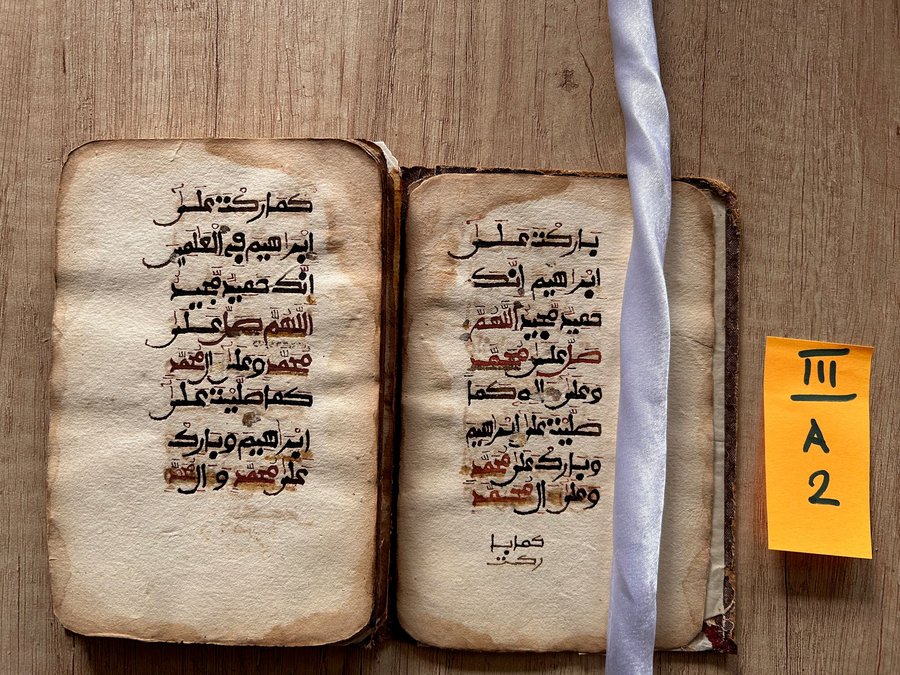
III A 2 al-Jazūlī, Dalāʾil ff.2a-3b, undated but 20th century
In Africa, Arabic scripts developed a unique aesthetic. Undated, this is an example of just one style, beautifully matched to the rhythm of its devotional content.
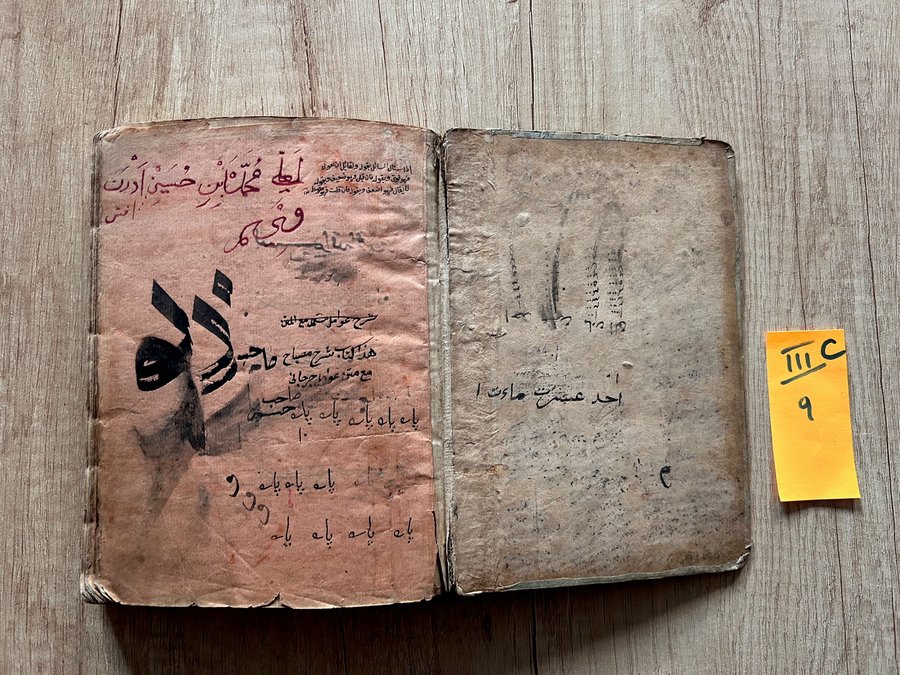
III C 9, f.1a, two Arabic grammars, 1563-4
Owners, borrowers and their children did most of their scribbling on the first and last pages of books. The more they scribbled, the happier we are: scribbles are social history. These are on a textbook copied in the mid-sixteenth century.
Notable items in the Bray, Ferrard, McDonald Collection for the Study of Arabic-script Books
The College would like to record its thanks to Professor Bray for this generous and significant donation.